


The Running Boom Is Social: How Digital Platforms and Gen Z Are Reshaping the Sport
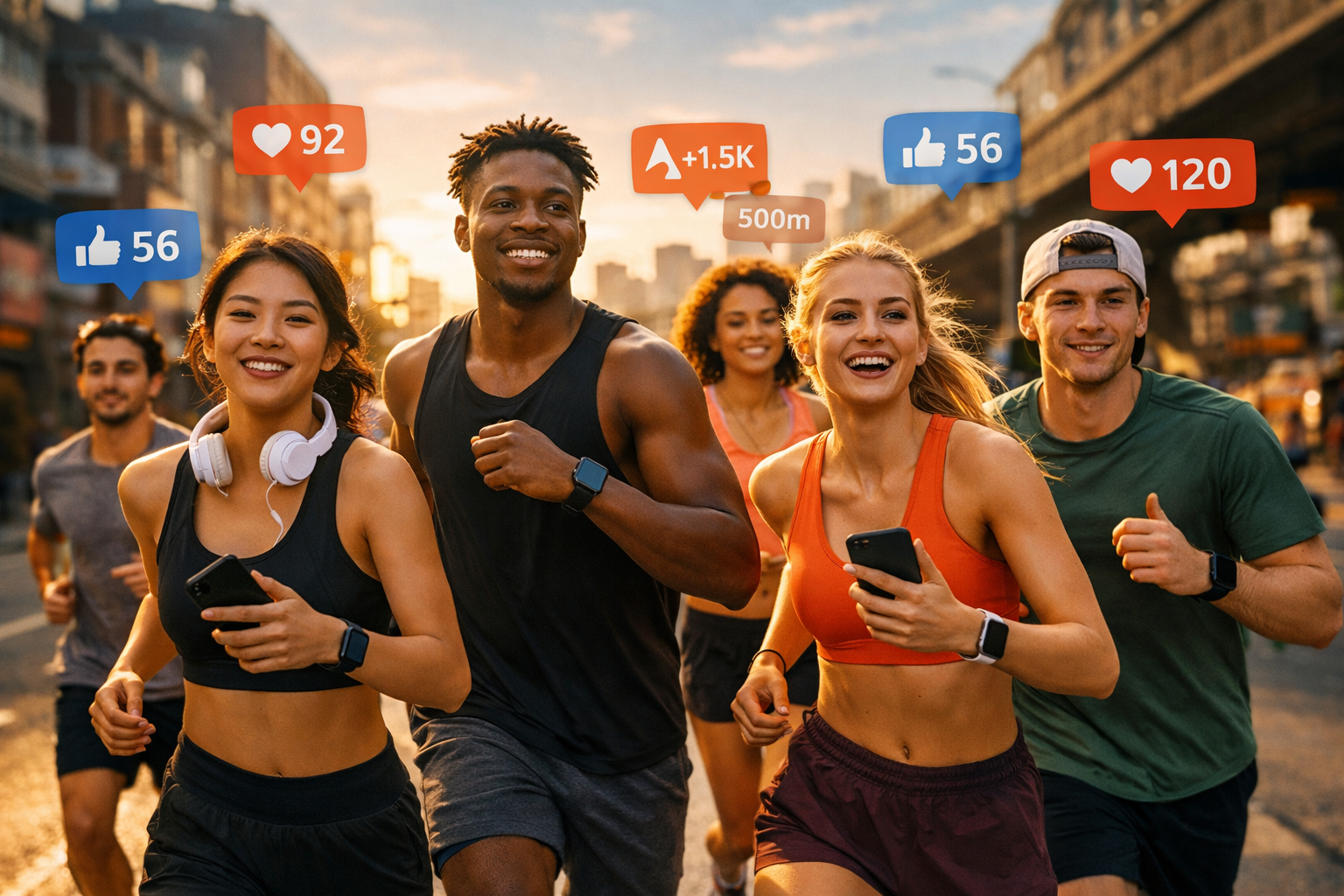
Over the past year, running has become one of the fastest-growing participation sports globally. According to GWI, the number of people who report running or jogging increased from 672 million in 2022 to nearly 785 million in 2025 — meaning more than 110 million new runners in just three years.
This growing popularity is also visible in the record demand for major races: the 2026 London Marathon received more than 1.1 million ballot applications, a new global record.
But beyond the participation numbers, what’s particularly striking is who is driving this growth — and why.
This new wave is largely driven by Gen Z, and unlike previous running booms, it is deeply intertwined with digital culture.
📈 The Gen Z Participation Surge
The clearest signal behind the running boom is generational. Gen Z participation grew from 186 million runners in 2022 to 259 million in 2025 — an increase of more than 70 million new runners in three years (source: GWI).
Millennials and Gen X remain large running populations, but their participation has been comparatively stable. In other words, Gen Z is not just joining the running movement — it is driving it.
Source: GWI
Younger audiences also interact with sport very differently from previous generations. For Gen Z, sport is rarely just about performance or competition — it’s also about identity, community, and shareable experiences. Which leads to a key point; today’s running boom is deeply intertwined with digital culture and social media storytelling.
Platforms like Strava, TikTok, and Instagram have transformed running from a largely individual activity into a highly visible, shareable social experience.
As a result, the running boom is not just happening on the streets and race courses — it’s happening online as well.
📱 From Individual Sport to Social Content
While running has traditionally been perceived as a solitary activity, digital platforms have fundamentally reshaped the way people experience the sport. Platforms like Strava have turned running into a social network as much as a fitness tracker, where athletes track their performances, share routes, and interact with other runners.
This social dimension is a key driver of engagement on the platform. According to HubSpot, 77% of Gen Z athletes say they feel more connected to others when seeing friends’ or family members’ activities on Strava, highlighting how social sharing has become a central part of the running experience.
The growing visibility of running online is also reflected in social media activity. According to Awario, the number of activities posted on Strava increased from one billion in 2017 to three billion in 2020, reaching four billion in 2025.
Running-related conversations across social platforms are equally significant. On Instagram alone, nearly 3,000 posts around running conversations were published in the past seven days, generating more than 16.5 million engagements across 500+ profiles, and reaching a potential audience of over 440 million followers. Mentions of Strava on Instagram have also increased by more than 70% between January 2023 and January 2026, according to Sprout Social.
Runs are no longer just tracked — they are documented, shared and celebrated online, from Strava segments to race-day recaps on Instagram or TikTok. What used to be a private training session has become a piece of digital content, contributing to the rapid growth of running culture online.
🏃♂️ The Rise of Community Running
Another major shift in the running ecosystem is the rapid growth of community-based running. Across major cities, informal run crews and branded communities now organize weekly runs attracting hundreds of participants.
According to Strava’s Year in Sport report 2025, the number of running clubs recorded on the platform increased 3.5 times in 2025 compared with the previous year, while club-organized events grew by 50% over the same period.
For many younger athletes, running is no longer just about training or competition — it is about belonging to a community. Data from Strava’s Year in Sport report shows that Gen Z members are 39% more likely than Gen X to say sport helps them meet like-minded people, while 37% of respondents see running clubs as a great way to make new connections.
Unlike traditional sports structures that require teams, facilities or memberships, running communities offer something simpler: an accessible social experience built around movement.
For brands and event organizers, these communities are becoming powerful engagement drivers. Run clubs often act as micro-communities of highly engaged participants, amplifying races, products and content organically across social platforms.
📲 Why Running Works on Social Media
Another key factor behind the current running boom is how naturally the sport translates into digital content.
Unlike many sports that require specific venues, teams, or broadcast production, running content can be created anywhere and by anyone. Every training session, race, or milestone becomes a potential story.
This dynamic is particularly strong among younger audiences: Gen Z is currently the most socially connected generation across most platforms. According to GWI, 51% of Gen Z users access Instagram at least once a day, compared with 40% of Millennials and 33% of Gen X. Similar patterns appear on platforms such as Snapchat or X, where Gen Z consistently records the highest daily usage rates.
Social platforms also shape who influences this generation. 27% of Gen Z say they follow influencers on social media, making them the fifth most-followed type of account for the generation — ahead of many traditional media sources.
In that environment, running content naturally thrives.
Several characteristics make running particularly powerful in the digital ecosystem:
- Built-in storytelling: Running naturally creates narrative arcs (first 5K → first 10K → half marathon → marathon), with each milestone becoming a shareable achievement
- Authenticity and relatability: Unlike elite professional sports, running content often comes from everyday athletes. This authenticity resonates strongly with younger audiences who tend to value real experiences over polished performances.
- Community amplification: Running communities regularly document group runs, races and challenges, creating a network effect where participants themselves become content creators.
- Low barriers to entry: Anyone with a pair of running shoes and a smartphone can participate in the culture. This accessibility dramatically increases the volume of content generated around the sport.
As a result, running now holds a unique position in the sports ecosystem: it is both a participation sport and a content engine.
Conclusion – What the running boom means for the sports industry
The current running boom is not simply about participation numbers. It reflects a broader shift in how younger generations engage with sport.
For Gen Z, sport is increasingly about community, identity, and digital expression, not just competition — and running sits at the intersection of all three. Its accessibility allows millions of people to participate, while social platforms transform those experiences into content that can be shared, amplified, and celebrated online.
For brands, leagues, and event organizers, this creates significant opportunities. Those that succeed in the coming years will be the ones that recognize running not only as a sport but also as a cultural platform — one driven by communities, creators, and digital storytelling.
Other News
The Running Boom Is Social: How Digital Platforms and Gen Z Are Reshaping the Sport
Brazilian Fans Are Changing the Game — and Brands Are Paying Attention
Beyond the final whistle: How the Super Bowl is becoming a global platform for experiences, brand activation and NFL expansion

Brazil emerges as a key market for FIFA, international clubs and digital sports strategy

Samba digital launches Fansights